Roundup
The best singing apps for beginners
Four apps, four different ideas of what learning to sing means — and which one fits what you actually want to do.
The short answer: if you want to sing songs you already love, start with Simply Sing. If you want exercises and a live view of your pitch, look at Sing Sharp or Vocaberry. If you are also learning guitar or piano, Yousician covers singing inside the same subscription.
The longer answer depends on what you mean by "learning to sing", because these apps mean different things by it.
What a singing app can do
Almost every singing app is built from four parts, in different proportions:
- Lessons and exercises — warm-ups, breathing, scales and intervals, in a set order. This is what builds control.
- Songs — a backing track and lyrics, sometimes adjusted to your voice. This is what keeps most people practising.
- A range test — your lowest and highest notes, and often a suggested voice type.
- Pitch feedback — the app listens and shows the note you sang against the note you were aiming for.
The useful question is not "which app is best" but which of those four you need most right now — they are also the criteria behind the comparison below, along with price and how many people have rated each app.
At a glance

Simply Sing
4.7Free + Premium subscription
- Best for
- Learning through popular songs, adjusted to your voice
- Watch out for
- Subscription terms are not spelled out on the listing

Sing Sharp
4.3Free + membership
- Best for
- Exercises, a range test, video lessons and a live pitch display
- Watch out for
- Membership pricing; not built around songs

Learn to sing with Vocaberry
3.4Free + in-app purchases
- Best for
- A step-by-step singing course with note-by-note feedback
- Watch out for
- Very few App Store ratings so far; range test and karaoke are separate apps

Yousician
4.6Free + subscription
- Best for
- Singing alongside guitar, piano or bass in one subscription
- Watch out for
- The most expensive plan here
Simply Sing: if songs are what keep you going
Simply Sing: My Singing App
by Simply Ltd
4.7 from 479,369 ratingsFree + Premium subscriptionActively updated
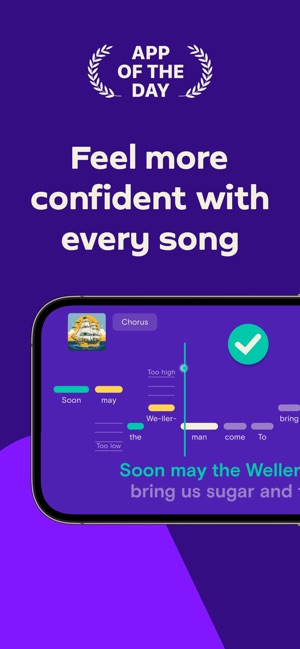
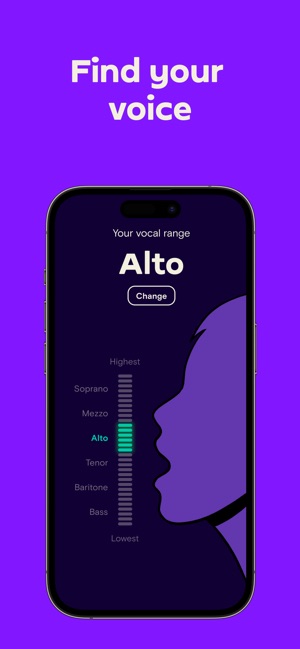
From Simply Ltd, the company behind Simply Piano. The listing says the app works out your voice type, adjusts songs to suit you and gives feedback on how you sang them. Songs are grouped into levels you unlock, with daily tips along the way. It is by far the most-rated app in this comparison.
Price: free to download. "Simply Sing Premium" is listed at several prices from $4.99 to $89.99, without saying which is monthly and which is yearly — check the price shown inside the app before you subscribe.
- Best for
- People who will only practise if it is a song they like, and want it adjusted to their voice.
- Less good for
- Readers looking for technique drills — the listing describes songs and levels rather than exercises.
Sing Sharp: if you want to see your pitch while you practise
Sing Sharp - Singing Lessons
by Sing Sharp Limited
4.3 from 13,724 ratingsFree + membershipActively updated
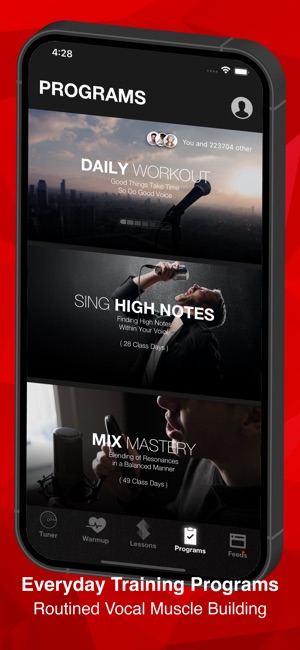
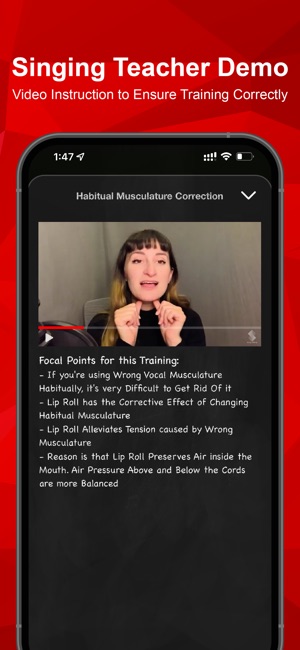
Sing Sharp starts with a quick vocal range test, then offers personalised lessons with video demonstrations. Its pitch detector shows, as you sing, every note you hit or miss. You can also record audio and video of yourself, which is useful for hearing what you cannot hear while singing.
Price: membership is listed at $19.99 a month, $39.99 for three months or $99.99 a year, plus small one-off packs of warm-up exercises.
- Best for
- Beginners who want warm-ups, a range test and a live view of their pitch more than a song catalogue.
- Less good for
- Karaoke — songs are not what this app is built around.
Vocaberry: a step-by-step course
Learn to sing with Vocaberry
by Boris Shestakov
3.4 from 5 ratingsFree + in-app purchasesActively updated
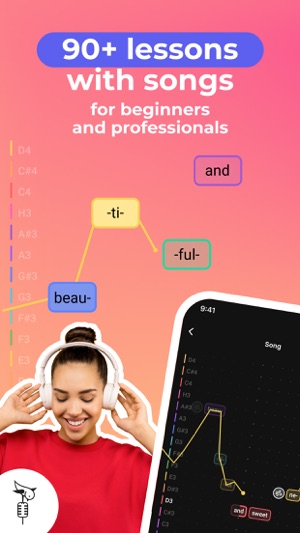
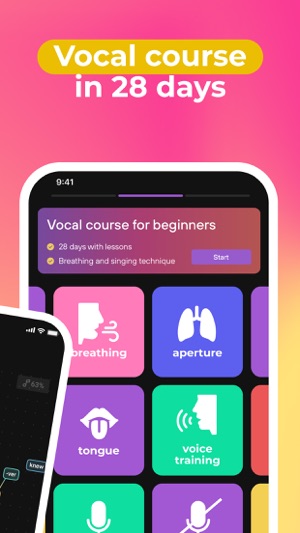
Vocaberry describes its main app as a vocal coach: a course of lessons, warm-ups and exercises, with real-time feedback on each note you sing. Of the four, it is the most like a course you work through from the beginning.
The same developer splits the other jobs into separate apps: Vocal Range for measuring your range, and Vocaberry Karaoke for songs. That suits you if you only want one of them, and is less convenient if you want everything in one place. The main app is available in English and 29 other languages, including Spanish and Russian.
Price: free to download. The listing's in-app purchases range from $2.99 to $99.99 without saying which is which term.
- Best for
- Beginners who want lessons in a set order, with the app showing whether each note was on pitch.
- Less good for
- Anyone who wants to read other users' experiences first — the App Store listing has very few ratings so far.
Yousician: if you are learning an instrument too
Yousician: Learn & Play Guitar
by Yousician Ltd
4.6 from 139,304 ratingsFree + subscriptionActively updated
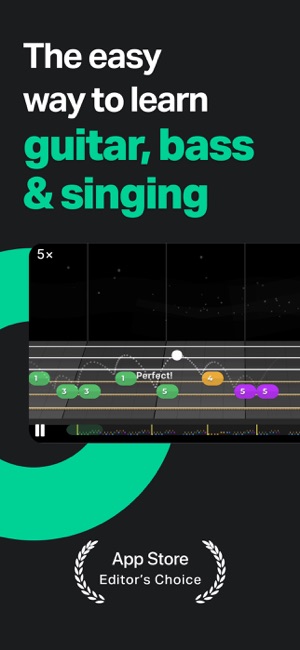
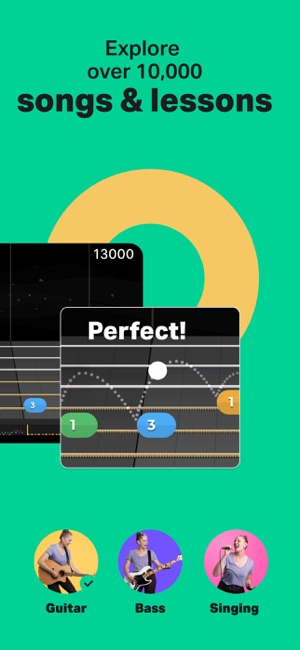
Singing is one of several instruments in Yousician. The listing describes lessons on technique, warm-ups and real songs, and says the app listens and gives instant feedback on your pitch. Its singing page adds two practical tools: transposing songs (automatically, once you have calibrated your range) and slowing them down.
Price: the US App Store lists a One Instrument plan at $19.99 a month or $119.99 a year, and Premium+ at $29.99 a month or $179.99 a year. The singing page advertises a Premium+ trial; whether singing can be your One Instrument is not stated, so check in the app.
- Best for
- Someone learning singing and guitar, piano or bass at the same time.
- Less good for
- A singing-only budget — the plan Yousician's singing page advertises covers every instrument and is the most expensive here.
Range tests and karaoke
A range test takes five minutes and is worth doing before you choose songs. Sing Sharp includes one, and Yousician calibrates your range so it can transpose. Vocaberry makes it a separate app, Vocal Range – Pitch Detector, which listens through the microphone, reports your lowest and highest notes and suggests songs that fit. You can also do it yourself with a piano: see how to find your vocal range.
Karaoke apps are about the song catalogue and the fun of performing, and only some of them show your pitch. Vocaberry's karaoke app shows the note to sing and whether you hit it, and lets you change key and tempo. We compare it with Smule, StarMaker and others in karaoke apps with pitch feedback.
How to get the most out of a free trial
Most of these apps give you a free tier or a trial. Use it to check the things that matter, not to collect badges:
- Sing a slow five-note scale. Does the app show your pitch while you sing, or only a score afterwards? Live feedback is far more useful for learning.
- Try a song that feels too high. Can you lower the key? If not, you will spend your practice straining.
- Open the third or fourth lesson. Is it still free? Many apps let you start and lock what comes next.
- Practise little and often. Ten minutes a day for a week tells you more about an app — and does more for your voice — than one long session.
Why ear training helps singers
Singing in tune is a listening skill before it is a voice skill. You have to hear the next note in your head before you can sing it, and an app can only tell you afterwards that you missed. Two things make that inner hearing quicker:
- Hearing intervals. Knowing how far apart two notes sound is exactly what pitch matching asks of you. Start with intervals, then practise with the ear training lessons.
- A little theory. When an app moves a song "down two semitones", knowing what a key is tells you what actually changed.
Check any note from a song or exercise on the virtual piano, and hear the gap between two notes on the interval explorer.
Was this helpful?
More from Resources
- A field guide to music learning appsSix categories of music app, what each is genuinely good at, and where each one runs out of road.
- The best apps for learning a musical instrumentEleven apps that teach you to play, checked against their current listings rather than their 2023 ones.
- The best sight-reading appsEleven apps for reading notation faster — including which of the old favourites have stopped being maintained.
- The best ear training appsEleven apps for training relative pitch, sorted by what kind of listening they actually train.